Subscribe to our Newsletter
Get regular stories, tips and solutions from Sustainable America and opt-in to receive roundups of the latest food and fuel news.




Jul 9th, 2012 | By Aubrey Yee
Imagine 10,000 shared bicycles distributed across 600 stations throughout New York City, all available for just 26 cents a day by purchasing an annual membership. Utilizing a private-public partnership, the city of New York has enlisted Citi Bank and Mastercard to sponsor the bike sharing program.
Continue Reading

Jul 8th, 2012 | By Aubrey Yee
Craig Venter is not your usual scientist. He's attractive and stylish, rides fast motorcycles and sails around the world. He's self diagnosed himself with ADHD, but this fact combined with his healthy ego may be the very reason he has gone so far in his field. He sets ambitious and seemingly impossible goals like mapping the human genome, which he did faster than anyone expected, and then he achieves them.
Continue Reading
Jul 7th, 2012 | By Aubrey Yee
Pineapples in Hawaii that were grown in Costa Rica, apples in New York City that came from California, the sushi on your plate in Las Vegas flown in from Japan. These days most of our food travels the world before it reaches a plate. Just like humans, who rack up a big carbon footprint when they travel anywhere, our food is racking up some mileage.
Continue Reading
Jul 6th, 2012 | By Aubrey Yee
Car sharing hits hyperdrive with an innovative new company called Getaround. Just under a year old, the company has already signed over 10,000 people up for the car sharing service.
Continue Reading
Jul 5th, 2012 | By Aubrey Yee
Information-based energy efficiency (IBEE) is the new buzz in large scale energy savings, and Opower is one of the companies leading the pack. Utilitizing the power of social media and the information gleaned from massive amounts of data, Opower is helping Americans save incredible amounts of energy (and plenty of money) each month.
Continue Reading
Jul 3rd, 2012 | By Aubrey Yee
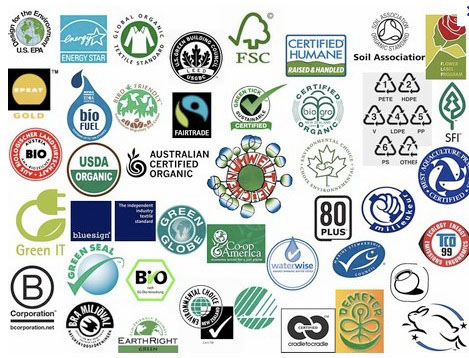
Natural, organic, fair-trade, these are all labels on our food that we have come to trust, labels that we believe tell us our purchases are good for us, good for the environment, that the people who grew our food were treated well. But who sets the standards for the labeling and who keeps track of those standards if there are any?
Continue Reading
Jul 2nd, 2012 | By Aubrey Yee
Raj Patel is an award winning writer, activist and academic concerned with how to feed the world. He saliently points out that more than 1.5 billion people worldwide are overweight and another 1 billion are going hungry. We are producing enough calories, but not nourishing the world. There is something clearly broken about our food system.
Continue Reading
Jul 2nd, 2012 | By Nicole Rogers
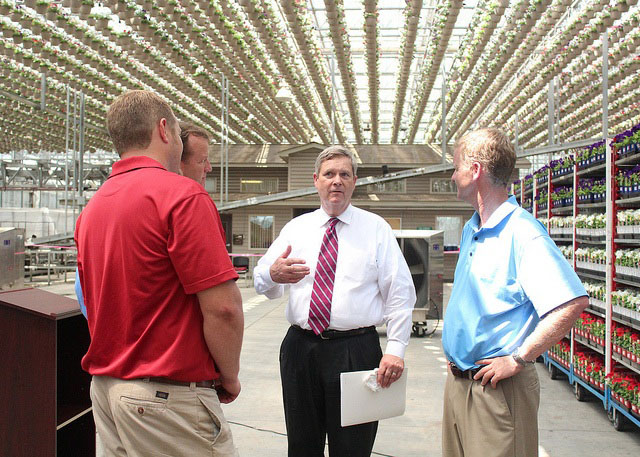 Agriculture Secretary Tom Vilsack meeting Tom Vanwingerden, Abe Vanwingerden and Art Vanwingerden of Metrolina Greenhouses. Photo by Holly Hess, via USDA flickr stream, under CC BY 2.0.
On June 25, Agriculture Secretary Tom Vilsack announced USDA funding for 450 projects that help agricultural producers and rural small businesses use renewable energy technologies, reduce energy consumption, and/or conduct feasibility studies for renewable energy projects. In all, the USDA announced nearly $7.4 million in energy grants.
Secretary Vilsack made the announcement while touring family-owned Metrolina Greenhouses in Huntersville, North Carolina. Metrolina has received a REAP guaranteed loan and three grants totaling over $1 million since 2007. In 2009, Metrolina received a REAP guaranteed loan and a grant to construct a wood boiler heating system to supplement and replace the natural gas and fuel used at their 120-acre facility. In addition to heating Metrolina’s greenhouses, using wood chips in the boiler provides an additional market for local lumber mills and logging operations.
Rick Alexander, a Tennessee small business owner, is using a Rural Energy for America Program (REAP) grant and investing another $325,000 to create the first solar powered business in his county. Electricity is the largest expense for his climate-controlled storage facility. The 260 panel, 60 kW solar photovoltaic system is expected to generate more than 71,000 kWh – enough electricity to meet over half of the energy needs of his business for the next two decades. By also participating in the Tennessee Valley Authority’s Generation Partners program, Alexander earns a premium on each clean kW produced, which is more than enough to cover the average monthly cost of electricity for his businesses.
In Mount Hope, Wisconsin, Maurice Nichols was selected to receive a grant to purchase a fuel efficient grain dryer for his farm, saving his business over 42% in annual energy usage. Not only is the dryer fuel efficient, but the fact that it is on site saves in trucking costs as well.
This funding is made available through the Rural Energy for America Program (REAP), which is authorized by the 2008 Farm Bill. (See our post on the 2012 Farm Bill.) REAP offers funds for farmers, ranchers and rural small businesses to purchase and install renewable energy systems and make energy-efficiency improvements. These federal funds leverage other funding sources for rural businesses, which hopefully leads to their sustained growth in the future, and an improved quality of life in rural America.
Just one more example of how the tide is turning toward alternative energy nationwide!
Jul 2nd, 2012 | By Aubrey Yee
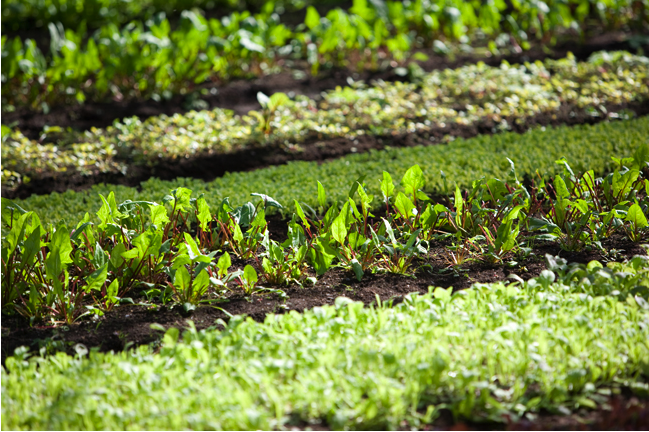 Salad greens in Stone Barns Center's 22,000-square foot, minimally-heated greenhouse. Photo: Roberto Falck Photography
This weekend, the Wall Street Journal featured renowned chef Dan Barber and his deep and passionate commitment to the local food movement. It’s a commitment that has brought great notoriety to both his cooking and the Stone Barns Center where his unique restaurant, Blue Hill at Stone Barns, resides. The brilliant chef shares his thoughts on everything from the myth of guilt-free eating to locavorism. He’s convinced we are just seeing the beginning of locavorism’s potential. Read the article from Friday’s Wall Street Journal here.
For more on the Stone Barns Center, see our previous post, Growing a New Crop of Farmers.
Jul 2nd, 2012 | By Aubrey Yee
Badger-Bluff Fannie Freddie is America’s best Holstein bull. That’s no small feat in a field of 8 million other dairy cows. He’s so fabulous that he already has some 346 daughters on the books. This is considerable being that he was only born in 2004 and his semen was only put on the market a few years ago.
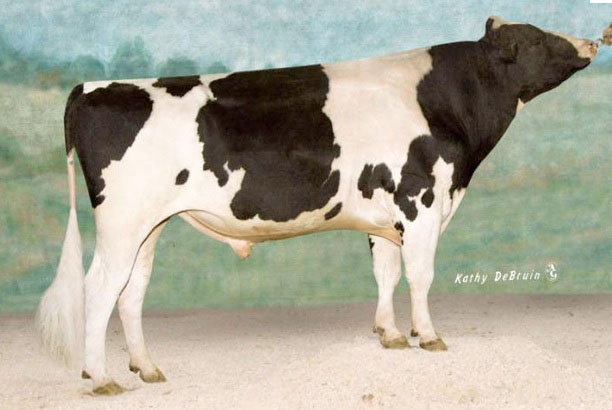
In 2009, the USDA took a look at some 50,000 markers on his DNA that were related to good milk production and officially declared him the best bull for siring milk producing daughters. They made this declaration before he had ever sired any progeny. Now that the first of his daughters have reached milk producing age, the predictions have been proven correct and the USDA’s use of big data has shown that a new sort of 21st century analysis deserves a central place in the US Dairy Industry.
While you might not expect it, dairy breeding is a perfect field for quantitative analysis of the sort that machine learning algorithms can offer today. Taking vast amounts of data and scanning for key information is what these algorithms are created to do. It’s how your Google search works and how online advertisers always seem to know exactly what you were just looking at online. In the dairy world, breeders keep copious pedigree records and sought after dairy cows need exhibit only a few important traits such as milk production, fat in the milk, protein in the milk, longevity, udder quality, all of which are easy to measure and quantify.
The reality is, in the mid-20th century dairy cows would be expected to produce less than 5,000 pounds of milk in a lifetime. Today that number is closer to 21,000 pounds. To reach these increases in output dairy producers have sometimes turned to hormones, but they have increasingly turned to genetics and careful selection of the best bred herd. The technology we have today, and the ability to screen DNA is greatly increasing the speed of a genetic selection process that has long been at work in the industry.
What this means for Badger-Bluff Fannie Freddie is a vast array of progeny scattered all over the country. He is in many ways the epitome of the modern dairy industry. An industry that is increasingly dependent upon technology and data to improve efficiency and effectively feed our growing populations.