Compostable cups, forks, takeout containers, bags, and packaging are increasingly easy to find. On the surface, they seem like an obvious improvement over conventional single-use plastic: use something once, toss it in the compost, and let nature take care of the rest.
But the word compostable often comes with a lot of fine print. Many compostable plastics require specific heat, moisture, and microbial conditions to break down. Your backyard pile may not provide them, and even your local commercial composting facility may not accept the product in the first place
So when a package says “compostable,” what does that actually mean? And, perhaps more importantly, where should it go when you’re finished with it?
Breaking down “compostable”
First, it helps to untangle a few terms that tend to get lumped together. Bio-based plastic is made partly or entirely from biological materials like corn and sugarcane, but that doesn't mean it's compostable. Biodegradable means microorganisms can eventually break down a material, emphasis on the “eventually”. There is no defined or consistent timeline for that process.
Compostable is more specific. These products are designed to break down under particular conditions involving microorganisms, moisture, oxygen, and heat. In the US, certifications like BPI Certified Compostable identify products tested to break down within a set timeframe without leaving harmful residues.
Still, certification doesn't guarantee a product belongs in your compost bin. The U.S. Composting Council leaves acceptance decisions to individual facilities, whose equipment and processes vary. Certified compostable and accepted by my composter aren't always the same thing.
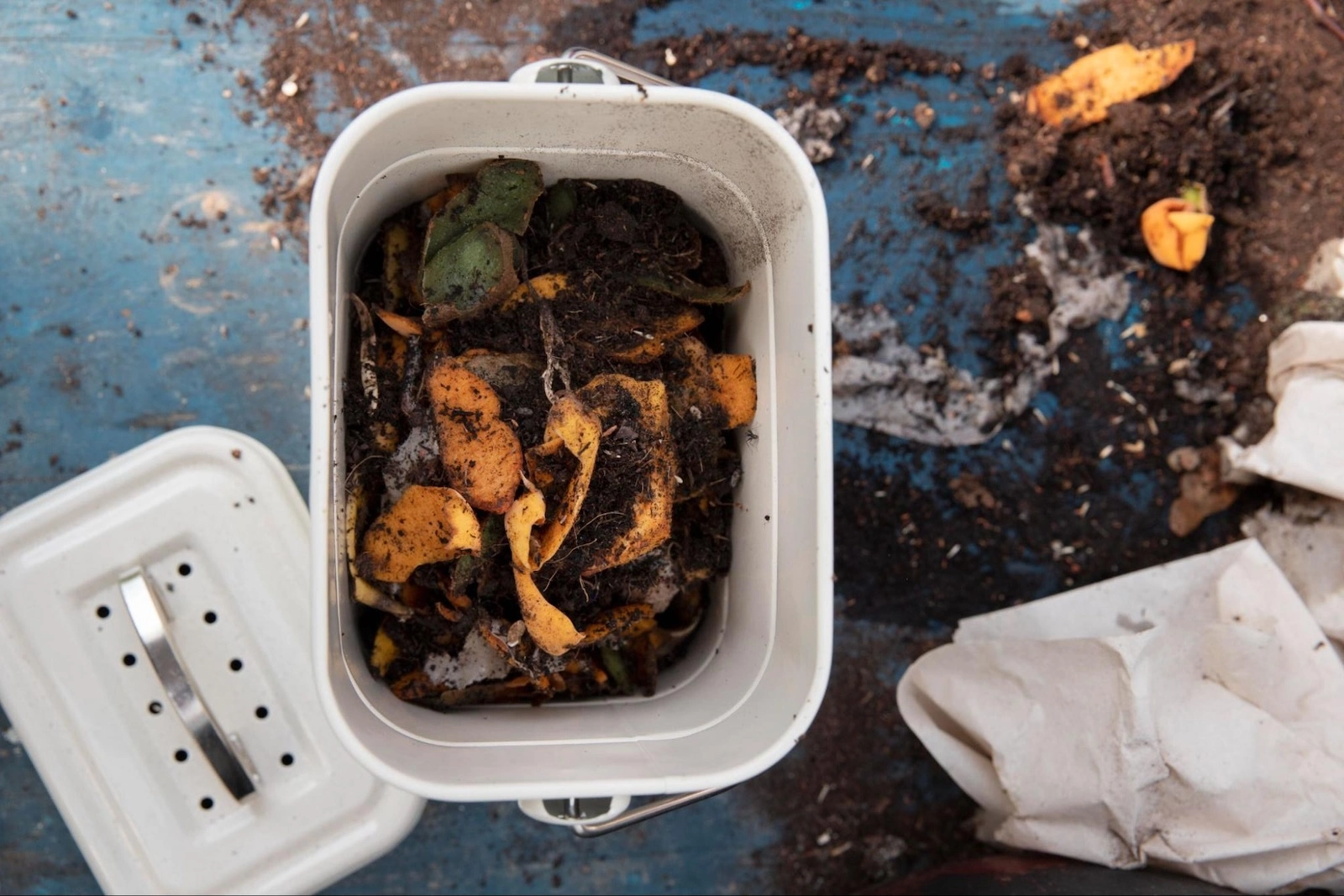
The catch: compostable plastics need the right conditions
Traditional plastics are engineered for durability, with molecular structures that resist heat, moisture, and microorganisms. Compostable plastics are intentionally designed differently, using materials that can break apart under the right conditions. As , compostability has to be engineered into the material.
Most compostable plastics are designed for industrial composting, where heat, moisture, oxygen, and processing time can be carefully managed. Backyard piles generally operate at lower, less consistent temperatures, and even commercial facilities don't universally accept these materials.
StopWaste notes that some composters remove anything that looks like plastic because conventional and compostable products can be difficult to distinguish. There are also ongoing concerns about incomplete breakdown, microplastics, and chemical additives. In short, there's a gap between what a material can do under ideal conditions and what actually happens after we throw it away.
So, where should compostable plastics go?
Research from the Composting Consortium and BPI found that nearly one-third of surveyed Americans would put compostable packaging in the recycling bin, where it can contaminate conventional recycling.
But the compost bin isn't automatically correct either. Compostable plastic should only go there if your local program accepts it. If it doesn't, your trash bin may unfortunately be the only option.
Clearer labeling could help. The same research found that certification marks and prominent “compostable” messaging improved people's ability to identify these products. And when the right system is available, compostable packaging can be useful, particularly for food-soiled items that can be collected alongside food scraps and diverted from landfill.
The rule of thumb: compost it only when your local program says you can, and don't put it in recycling.
The better question: Is it compostable where you live?
Products labeled home compostable are designed to break down at the lower temperatures of backyard piles, but even these aren't foolproof.
A study highlighted by Civil Eats tested 14 home-compostable materials in several backyard systems and found many had not completely decomposed after six months. BPI recommends allowing its certified home-compostable products as long as 12 months to fully break down.
Temperature, moisture, pile size, and what else you're composting can all affect the outcome. Before putting plastic in a backyard pile, look specifically for a home-compostable certification. And for curbside or community composting, check your local program's rules first.
The label is only half the story
Compostable plastics aren't a false promise, but they aren't a magic replacement for conventional plastic either. Their benefits depend on the product reaching a composting system that can actually process it.
There's also a bigger issue: replacing a disposable plastic fork with a disposable compostable fork still leaves us with a disposable fork. Reducing unnecessary single-use products and choosing reusable alternatives remains the simpler solution. Compostables can fill useful gaps, particularly where food and packaging are difficult to separate, but they aren't a replacement for every piece of single-use plastic.
So when you see “compostable” on a package, look beyond the label. The better question isn't simply “is this compostable?” It's “Is this compostable where I live?” or better yet “Is this something I can use a reusable alternative for?”.