Subscribe to our Newsletter
Get regular stories, tips and solutions from Sustainable America and opt-in to receive roundups of the latest food and fuel news.



Jun 1st, 2012 | By Aubrey Yee
When you think of ‘energy’, ‘snail’ is not usually the next word that comes to mind. But researchers at Clarkson University aim to change that. They have implanted a living snail with a biofuel cell that creates electricity using the snail’s natural glucose as fuel. Really, we’re not making this up!
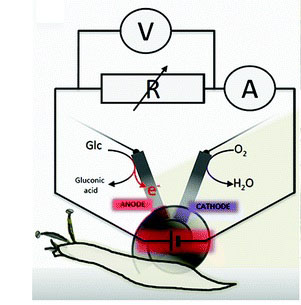
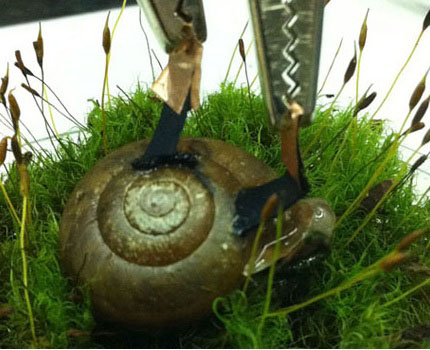
The snail lives its life as usual with some electrodes implanted in its body and then connected to an external circuit. PETA may not love the technology, but the scientists involved in the study maintain that the snails live a happy and mostly uninterrupted life.
While the technology is admittedly in its infancy, the eventual idea is to create robotic life that can internally power itself. It’s no
surprise that the Department of Defense is very interested in the research. They have been looking for ways to increasingly remove live humans from battle and replace them with different types of robots.
 This research, published in the Journal of the American Chemical Society, is not the only paper dealing with electricity produced by living creatures. A similar study was just conducted by Daniel Scherson at Case Western Reserve University in Cleveland, Ohio. In his study, the creature of choice was a cockroach. Just imagine, your house could someday be powered by a hoard of wild cockroaches. Ew!
Photos: Clarkson University
Jun 1st, 2012 | By Nicole Rogers
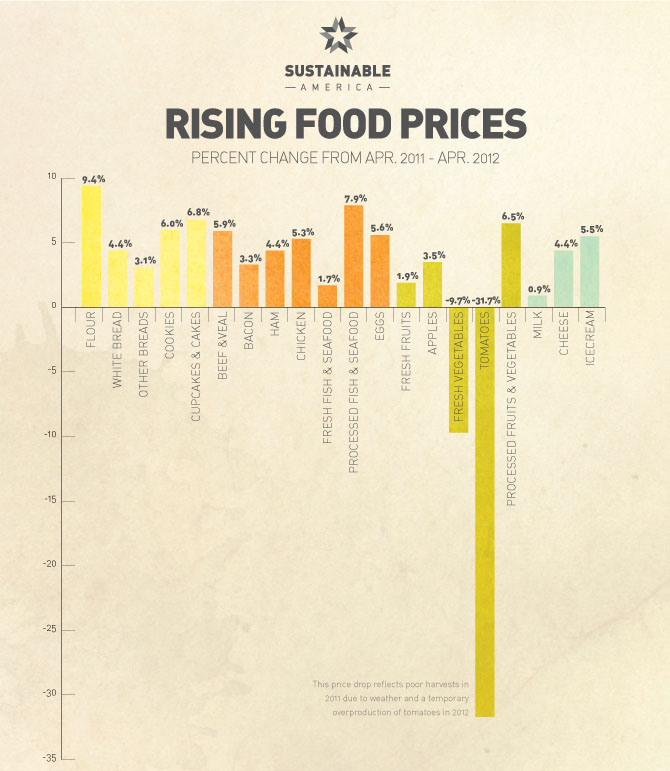
The US Bureau of Labor Statistics released the April 2012 Consumer Price Index (CPI) on May 15, and the numbers on food prices have continued their upward trend as expected. The food at home index (grocery store prices) increased 3.3% since April of 2011, while general food prices were similar - up 3.1% overall.
The price of food has been increasing for years. Total food expenditures in the US increased 3.4% from 2009 to 2010, and the food at home CPI surged 4.8% in 2011.
This isn’t normal inflation, so what is causing the steady uptick in food prices?
Food prices are really a global issue. Countries less dependent on food imports like the US are less affected by global volatility in food prices, but we are not left unscathed. Factors that affect food prices include oil prices, weather, small yields, higher demand, and crops diverted to biofuels.
Much of our food is shipped long distances using a system completely dependent on oil. When the price of oil goes up, typically the price of food goes up too. Food producers and retailers try to absorb as much of that cost as possible until they have to pass it along to consumers.
Unusual weather patterns attributed to climate change have affected harvests worldwide, often producing smaller yields, and sometimes decimating an entire crop. Have you tried to buy a pine nut recently? The price has skyrocketed in the past few years due to a poor crop and increased demand in China, which led them to cut their exports. This story on pine nuts from the Chicago Tribune is a good example of how a few of these factors can dramatically change the price of a given food.
For another good example closer to home, notice the price of vegetables and tomatoes specifically in the graph above. It’s good the price of something is dropping, right? Not so fast. The price drop does reflect a strong supply of fresh market vegetables this year, but it also reflects poor harvests in 2011 due to severe spring freezes that raised the price of tomatoes almost 50% last year. Usually Mexico’s fresh vegetable crop makes up for US freeze damage, but in 2011 the freezing weather went far enough south to affect Mexican crops as well. In addition, there was a temporary, and controversial, overproduction of tomatoes in 2012 that drove prices even lower.
The growth of the economies of countries like China and India have meant a greater demand for certain foods like meat and high quality grains. This increase in demand drives prices for these items, among others, higher.
While biofuels are an important alternative fuel source that could help us decrease our dependence on oil, in recent years large portions of the domestic corn crop has been diverted to biofuel production. The same is true in places like China and India. This means less corn to feed cows, less corn to make into food products, and of course higher demand for corn, which leads to higher prices.
It’s clear that food prices are affected by a complex web of factors from weather to politics to human taste. As the world we live in changes, we will have to be flexible and innovative to keep up with the rising price of food.
Jun 1st, 2012 | By Aubrey Yee
 USDA</a></span>
Food Desert Locator from the USDA
## What is a food desert?
It’s an area where healthy, fresh food is difficult to obtain. There are increasing areas of America today where the only convenient place to buy food is a convenience store….which means a dearth of healthy, fresh whole foods for many Americans. In these food deserts, the supermarkets and the fresh food have simply moved out of town.
The USDA created this Food Desert interactive map. You can click on any shaded area to find out the population there without access to fresh foods as well as interesting and useful facts like the number of people in that area who are low-income or children ages 0-17.
Where the easiest thing to buy is chips, soda or a fast food burger one would think that rates of obesity and other diet related health issues are rising. But in fact, recent studies cited in articles by Mother Jones, the New York Times, and the Atlantic magazine have shown that income rather than access to fresh and healthy foods plays a greater role in obesity rates. What does that mean for policy makers and non-profits trying to tackle the obesity problem? Perhaps access isn’t the only issue…
- Access: healthier foods are less available
- Cost: healthier foods cost more
- Skills: healthier foods require preparation and cooking
- Equipment: cooking healthier foods requires kitchen facilities, pots, and pans
- Transportation: even if stores are available, they might be too far away
- Quality: even if stores sell fruits and vegetables, they might not be fresh
- Marketing: fast foods, snacks, and sodas are heavily marketed in low-income areas
(from The Atlantic)
Of these, it seems that cost might be the number one stumbling block on the path to healthier eating. When given the choice between fresh vegetables to cook into a stew or a drive through $1 fast food menu, you can imagine the more common choice for a cash-strapped, time-strapped, recession riddled, working family of four. It seems we’re going to have to find ways to make fresh healthy foods not only more accessible, but also more convenient and inexpensive like their Mc-counterparts.
May 31st, 2012 | By Aubrey Yee
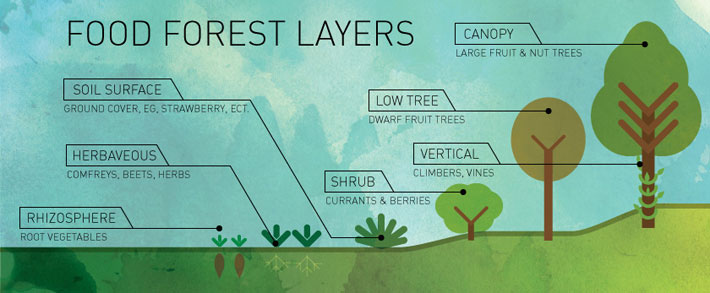
What is a food forest?
The first of its kind in the US, the Beacon Hill Food Forest in Seattle “is a gardening technique or land management system that mimics a woodland ecosystem but substitutes in edible trees, shrubs, perennials and annuals. Fruit and nut trees are the upper level, while below are berry shrubs, edible perennials and annuals.”
This is nothing short of revolutionary. Imagine if all the public spaces in our cities were full of edible foods free for the taking? The seed for the idea started in a permaculture design class. Then, momentum for the idea grew and a community group was started called Friends of the Food Forest.
It wasn’t easy to get the local community to agree to converting the seven acre public park into a self-sustaining food source. The natural objections ranged from “what happens if someone gets hurt picking fruit?” to “what if one person eats all the bluberries?”
To garner widespread support, the visionaries behind this project engaged in public outreach including mailing thousands of informational postcards, hosting informal events and soliciting input from all the members of the surrounding communities.
For the planners of this food forest, a picked over blueberry bush is not a problem, in fact that would be seen as a true measure of the park’s success.
The food forest is currently in the initial stages of development. The plan calls for a 1.75 acre test zone to be completed this year with a $100,000 grant. If the test is successful, the remaining seven acres will be developed in a few years. It’s a model for other cities to follow, and definitely one to watch.
May 31st, 2012 | By Aubrey Yee
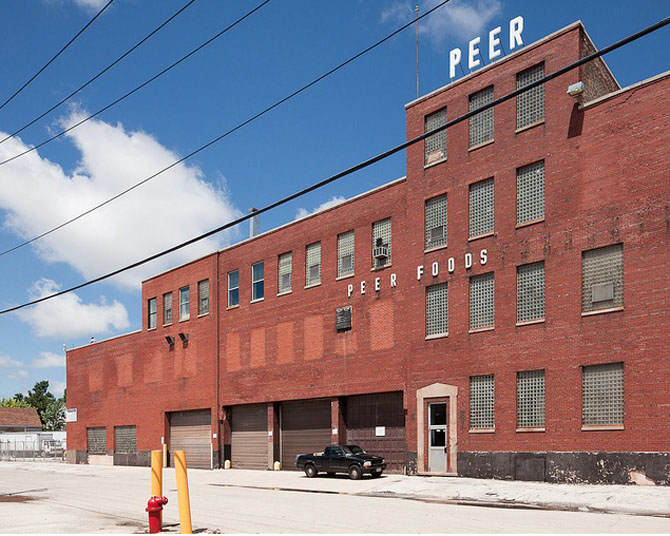
Imagine that decrepit old building you drive by every day on your way to work, the one with the cracked windows and cobwebs visible in the morning light, transforming into a vertical farm that produced tons of delicious fresh food and literally zero waste. Sound like a dream? Well in Chicago’s meatpacking district this vision has become reality. There you can find “The Plant”, a 93,500 square foot old meatpacking plant that entrepreneur John Edel has transformed into a co-op vertical farm and food business incubator.
Because of its history in meatpacking, the building already contained food-grade materials which allow for legal and safe food preparation (no asbestos here!) With an eye towards bringing manufacturing jobs back into the city, Edel decided to stick entirely with food in his building.
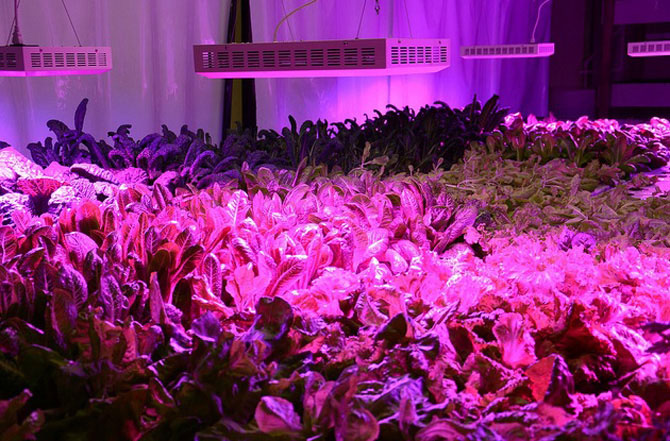
Inside “The Plant”, a name with now double meaning, there are a few bakeries, a kombucha tea brewery, tilapia fish farm, mushroom garden, and three aquaponics farms. Now they want to add a brewery so that the grain waste from brewing beer will be able to feed the fish farm, and the waste from the fish will feed the mushroom farm and the plants will clean the water and send it back to water the fish. No waste, everything is used…
If you’re in Chicago, you can tour The Plant to see how things run or even give a few hours as a volunteer to learn some new skills. And if you’re really ambitious, find out a way to convert your local urban eye sore into a wonder house of food production for your community.
May 29th, 2012 | By Aubrey Yee
You just got a shiny new electric vehicle, you’re hip and ready to go. Driving could be a dream, but where are you going to “fill up”?
What if you could charge your new car while driving it? Sounds fantastical, but actually the ability to charge while you drive with wireless technology may be just around the corner.
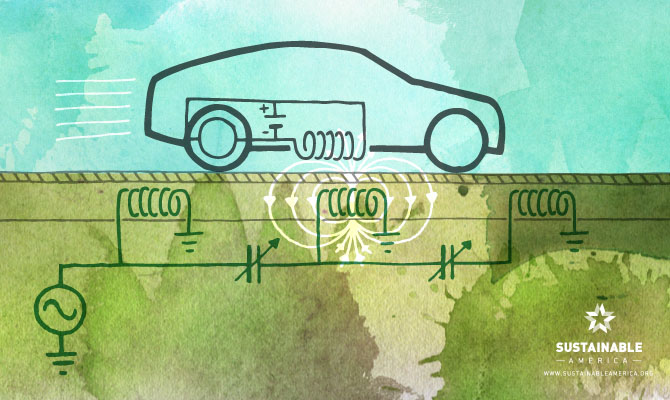
Researchers at Stanford have come up with a wireless charging technology that uses “magnetic resonance coupling” - in other words, copper coils in your car and in the ground transfer electricity between each other while you are driving. Charge while you’re driving and you never have to stop to refill your battery!
This potentially revolutionary new system is outlined in a paper recently published in the journal Applied Physics Letters.
While there are some kinks to be worked out, the idea behind the technology is quite innovative and tackles head on the “range anxiety” that many people feel when deciding whether or not to purchase an electric vehicle.
Imagine a carpool lane magnetized for electric cars only. It would require tearing up some of the freeway pavement, but the metal coils needed to make it run are very affordable. One more important innovation on the road to a new way of driving.
May 28th, 2012 | By Aubrey Yee
Nestled in the redwoods of northern California’s Mendocino county is the small town of Willits. This community is the home of the farming pioneers Ecology Action, and the home of their Grow Biointensive mini-farm.
Founded in 1971, Ecology Action was first headquartered in Palo Alto, CA. The project’s original aim was and still is to “teach regular classes, collect data, make land available for gardening and publish information” on the techniques of Biointensive agriculture. The work grew from a collective concern about worldwide starvation and malnutrition as a result of overpopulation.
At the foundation of the Grow Biointensive method are the scientific principles which underlie ancient traditional farming methods such as:
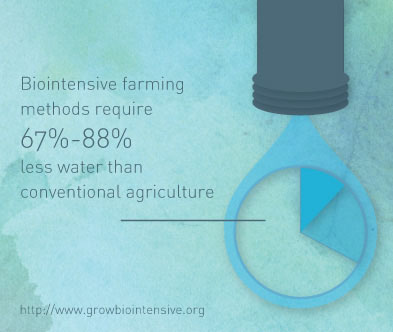 The methods aim to minimize water inputs (done properly this method requires 67-88% less water than conventional agriculture) and produce more food on less land by increasing the soil health and producing food without the use of petroleum or natural gas products.
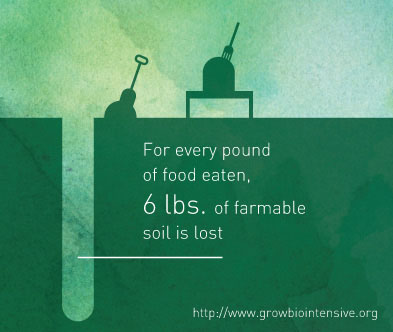
According to Ecology Action, “There may be as little as 40 years of farmable soil remaining globally. For every pound of food eaten, 6 to 24 pounds of soil are lost due to water and wind erosion, as the result of agricultural practices.” This means that soil health should be a top priority for anyone passionate about food security for the future.
 The group now holds workshops at the farm in Willits and at other locations around the country teaching others how to grow more food with less space, save water and replenish soil during the process.
May 27th, 2012 | By Aubrey Yee
What is Vermicomposting?

It almost sounds like a foreign word, but vermicomposting is the process of using worms to compost food waste into a rich, black humus. The “humus” is actually a compost of the worm castings (castings is a fancy way of saying: worm poop!)
The worms eat the food scraps, paper, etc that you put into your bin and their excrement is a rich, black, dirt-like compost that your plants will absolutely love! (and it has no smell, it really looks and feels like dirt, so don’t worry!)
To get started you need:
If you choose to buy a worm bin, there are a few different styles to choose from.
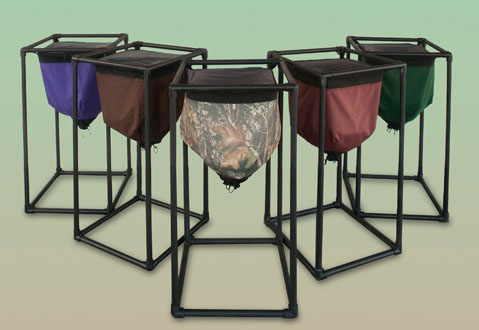

There are also several websites that will help you build your own worm bin.
Once you have the bin and the worms, you’ll want to prep it for success. The worms like paper including your junk mail minus the plastic parts. They eat most food waste as well with the exception of dairy, meats and citrus (although citrus is ok in small amounts).
The first time you put the worms in the bin make sure you have a good mix of paper and food waste. The shredded up paper/newspaper/old magazines/cardboard is called “bedding” and you’ll need a good layer of bedding to start your bin off. Make sure you shred it well so the worms can move around and through the bedding. Spray a little water on the bedding to get it damp.
You’ll want to add some of these paper products every so often so the inside of the bin doesn’t get too wet. The heat inside the bin creates water vapor and your worms can drown in too much water!
Most bins will have a valve to drain excess water. The water is actually called “worm tea”. This brown “tea” is also great for your plants or your garden.
Expect to harvest your worm castings every few months. All you need to do is keep feeding your worms. The amount of worms you’ll need depends on how much kitchen waste you produce each day. Start with one pound of worms for a typical family of four and add more if they aren’t eating the food fast enough.
It helps to chop or cut up the food and paper waste before putting it in your bin. The worms will be able to eat it faster.
The worms will keep reproducing and if a couple escape into your soil it’s good for the whole ecosystem so don’t worry! The great thing about worm bins is they don’t smell - as long as you follow the rules and don’t put in any dairy or meat. It’s a great way to up-cycle almost all your food waste. And when you put the compost back into your garden to grow more food, you’ve created a closed-loop, truly sustainable food system.
May 26th, 2012 | By Aubrey Yee
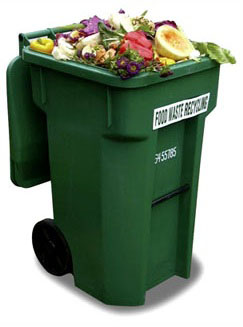
What is food waste and what can I do about it?
Food waste is a significant problem. According to the United Nations Food and Agriculture Organization, approximately 1/3 of food produced for humans in the world is either lost or wasted.
Think about that for a moment: 1/3 of the food we produce and all the energy, time, resources (water, land) and money that went into growing it, packaging it and shipping it is wasted.
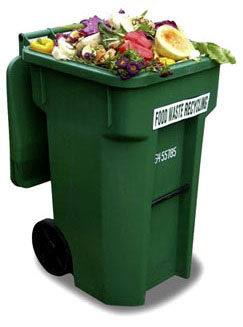
Here are a few other startling facts from the UNFAO website:
Some of this loss is due to poor infrastructure, especially in developing countries, when the food is processed, stored and package for distribution. But a lot of the waste comes from consumers in the developed world.
What can you do to curb your own food waste?
It’s time to realize that throwing away food is no longer acceptable practice. Raising awareness and changing personal habits is the first step.
May 26th, 2012 | By Aubrey Yee

Electric scooters are all the rage in some cities. San Francisco is launching Scoot Networks, a scooter version of the Zipcar idea, next month. Subscribers pay a monthly fee to access a city-wide network of super cute electric scooters.
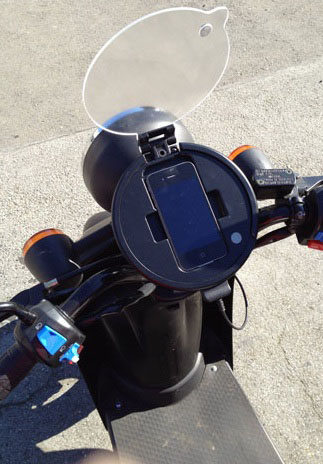 You can find the scooters nearest you with your smartphone. Your phone then slips into a dock on the scooter’s dashboard to unlock it and voila! you’re off and riding.
The scooters top off at about 30 mph and go for about 30 miles before they need a charge, perfect for the range of city riding. Scoot Networks was one of the companies chosen by the Greenstart cleantech startup accelerator program which provides start up capital to innovative cleantech business ideas.
Photos Wired.com
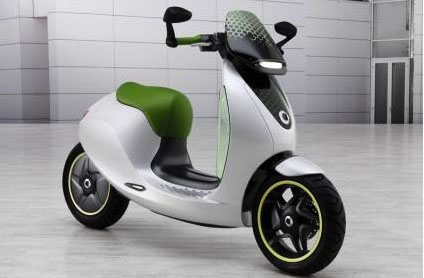
In other great scooter innovations, the people of smart, an eco-subsidiary of Daimler, are now developing a scooter line called eScooter. It’s cute and fast, up to 30 mph with a 60 mile range on full charge. Originally unveiled during the 2010 Paris Motor Show, the scooter is just one part of Daimler’s overall strategy to create comprehensive urban mobility for the future. Photo Daimler