Subscribe to our Newsletter
Get regular stories, tips and solutions from Sustainable America and opt-in to receive roundups of the latest food and fuel news.



Jul 26th, 2012 | By Aubrey Yee
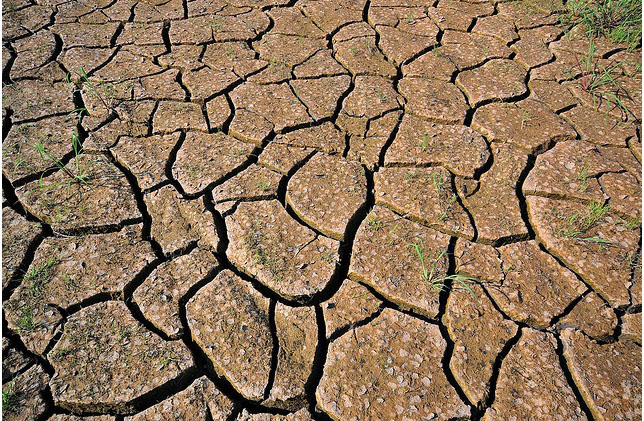
With comparisons to the dustbowl experience of the early 1930s already starting to circulate, it is still unknown how bad the drought we're experiencing this summer can get.
Continue Reading
Jul 24th, 2012 | By Nicole Rogers
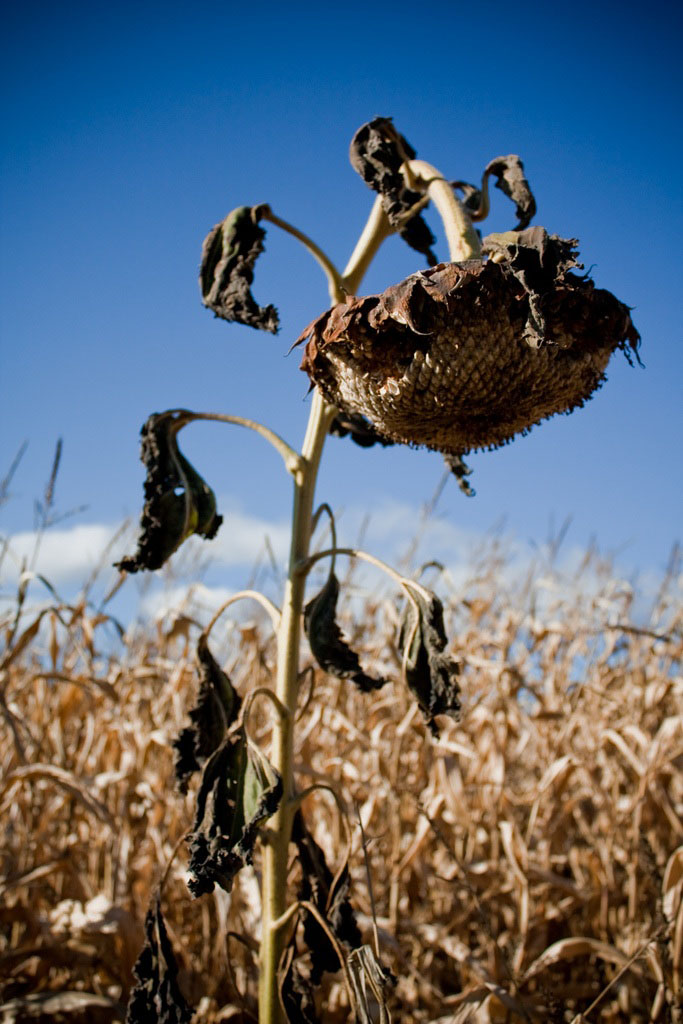
The National Oceanic and Atmospheric Administration created the animation below to show the affects of the historic 2012 drought on vegetation month by month. It's eerie to watch the dying vegetation spread across the country. You can also see how the first half of July has seen an acceleration of burned-out vegetation brought on by high temperatures and by the length of the drought.
Continue Reading

Jul 19th, 2012 | By Aubrey Yee
The local food movement has been gaining ground recently in the sunny city of Honolulu. At the forefront of the culinary shift are a few brave souls who believe in the power of combining locally sourced foods with creative menus and innovative restaurant concepts.
Continue Reading
Jul 18th, 2012 | By Aubrey Yee
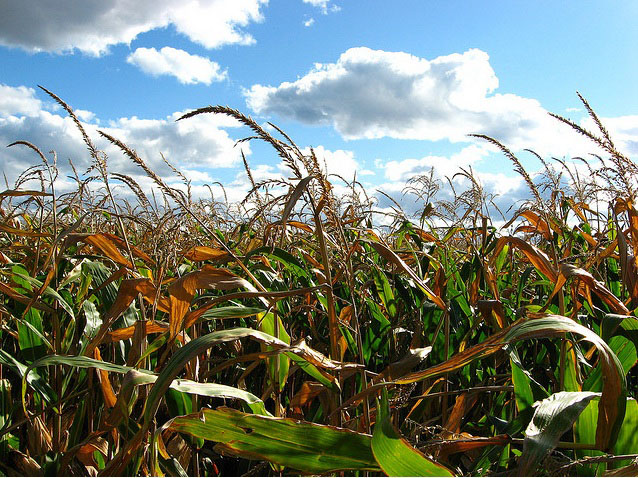
What is a weed? According to Wikipedia, a weed is "A herbaceous plant not valued for use or beauty, growing wild and rank, and regarded as cumbering the ground or hindering the growth of superior vegetation..." A fitting description for the invasive superweeds currently inundating America's agricultural heartlands.
Continue Reading
Jul 7th, 2012 | By Aubrey Yee
Pineapples in Hawaii that were grown in Costa Rica, apples in New York City that came from California, the sushi on your plate in Las Vegas flown in from Japan. These days most of our food travels the world before it reaches a plate. Just like humans, who rack up a big carbon footprint when they travel anywhere, our food is racking up some mileage.
Continue Reading
Jul 3rd, 2012 | By Aubrey Yee
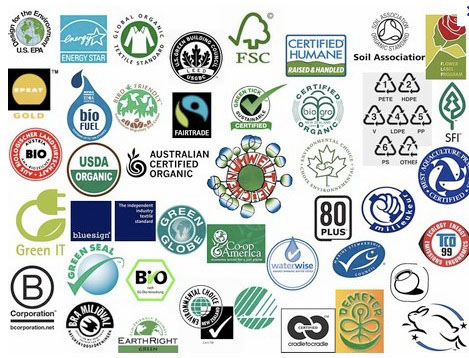
Natural, organic, fair-trade, these are all labels on our food that we have come to trust, labels that we believe tell us our purchases are good for us, good for the environment, that the people who grew our food were treated well. But who sets the standards for the labeling and who keeps track of those standards if there are any?
Continue Reading
Jul 2nd, 2012 | By Aubrey Yee
Raj Patel is an award winning writer, activist and academic concerned with how to feed the world. He saliently points out that more than 1.5 billion people worldwide are overweight and another 1 billion are going hungry. We are producing enough calories, but not nourishing the world. There is something clearly broken about our food system.
Continue Reading
Jul 2nd, 2012 | By Aubrey Yee
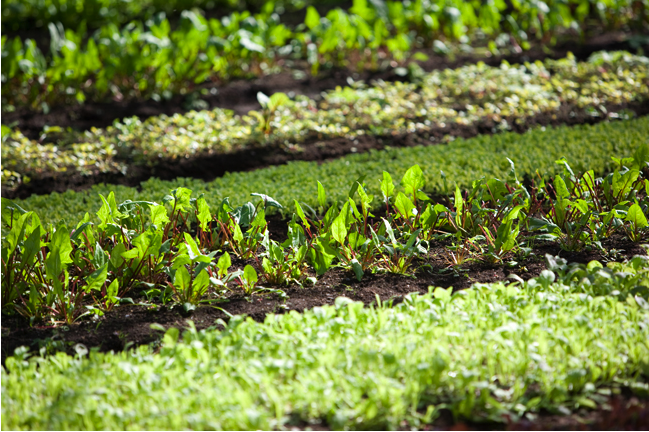 Salad greens in Stone Barns Center's 22,000-square foot, minimally-heated greenhouse. Photo: Roberto Falck Photography
This weekend, the Wall Street Journal featured renowned chef Dan Barber and his deep and passionate commitment to the local food movement. It’s a commitment that has brought great notoriety to both his cooking and the Stone Barns Center where his unique restaurant, Blue Hill at Stone Barns, resides. The brilliant chef shares his thoughts on everything from the myth of guilt-free eating to locavorism. He’s convinced we are just seeing the beginning of locavorism’s potential. Read the article from Friday’s Wall Street Journal here.
For more on the Stone Barns Center, see our previous post, Growing a New Crop of Farmers.
Jul 2nd, 2012 | By Aubrey Yee
Badger-Bluff Fannie Freddie is America’s best Holstein bull. That’s no small feat in a field of 8 million other dairy cows. He’s so fabulous that he already has some 346 daughters on the books. This is considerable being that he was only born in 2004 and his semen was only put on the market a few years ago.
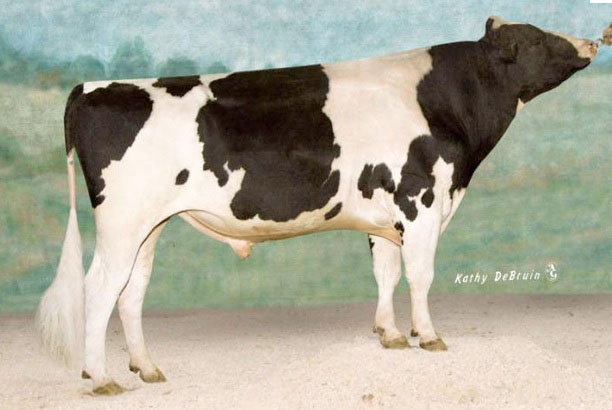
In 2009, the USDA took a look at some 50,000 markers on his DNA that were related to good milk production and officially declared him the best bull for siring milk producing daughters. They made this declaration before he had ever sired any progeny. Now that the first of his daughters have reached milk producing age, the predictions have been proven correct and the USDA’s use of big data has shown that a new sort of 21st century analysis deserves a central place in the US Dairy Industry.
While you might not expect it, dairy breeding is a perfect field for quantitative analysis of the sort that machine learning algorithms can offer today. Taking vast amounts of data and scanning for key information is what these algorithms are created to do. It’s how your Google search works and how online advertisers always seem to know exactly what you were just looking at online. In the dairy world, breeders keep copious pedigree records and sought after dairy cows need exhibit only a few important traits such as milk production, fat in the milk, protein in the milk, longevity, udder quality, all of which are easy to measure and quantify.
The reality is, in the mid-20th century dairy cows would be expected to produce less than 5,000 pounds of milk in a lifetime. Today that number is closer to 21,000 pounds. To reach these increases in output dairy producers have sometimes turned to hormones, but they have increasingly turned to genetics and careful selection of the best bred herd. The technology we have today, and the ability to screen DNA is greatly increasing the speed of a genetic selection process that has long been at work in the industry.
What this means for Badger-Bluff Fannie Freddie is a vast array of progeny scattered all over the country. He is in many ways the epitome of the modern dairy industry. An industry that is increasingly dependent upon technology and data to improve efficiency and effectively feed our growing populations.
Jun 19th, 2012 | By Nicole Rogers
Just 25 miles north of New York City lies an idyllic farm with a world class restaurant. The farm is The Stone Barns Center For Food and Agriculture, the restaurant, Blue Hill at Stone Barns. On this unique farm you might see farmers cooking and chefs farming. Bringing appreciation to the food we eat and how it is grown is central to The Stone Barn Center’s philosophy.
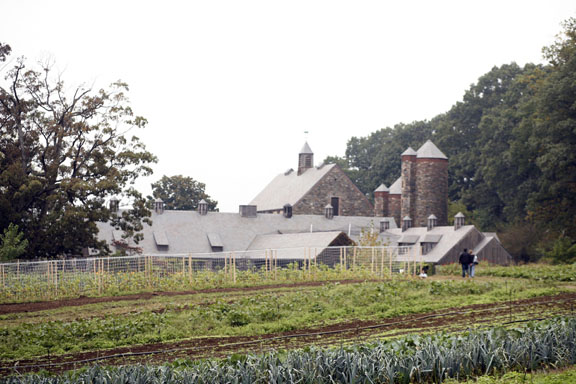
The center’s mission is to create a healthy and sustainable food system that benefits us all. With this goal in mind, the center has recognized the need for a new generation of farmers in the US, where the average age of farmers is 57.
One of the ways Stone Barns Center is working to help young farmers, and in turn stop the loss of farmers, farmland and rural economies, is through their Growing Farmers Initiative.
“Traditionally, farming knowledge was passed down from generation to generation. Today, many young people entering the field did not grow up on farms and are eager to learn directly from seasoned farmers. Stone Barns makes this possible for young farmers during every season of the year, offering paid, full-time apprenticeships to young people who are committed to working the land. Farm apprentices are given real responsibilities and gain practical knowledge on everything it takes to run a farm. Apprentices also benefit from networking opportunities with other farmers, apprentices and interns through weekly visits to other farms in the Hudson Valley.”
An exciting addition to the center’s Growing Farmers Initiative is their Young Farmers Conference. Young farmers (and by young they also mean new farmers of all ages) convene at the Stone Barns Center each December to attend workshops, exchange ideas, eat, and dance.
“Workshops are taught by seasoned farmers, and topics have included securing farmland, financing a farm, and launching a grass-based dairy farm. Recognizing that farming is by nature a solitary profession, our conferences and workshops provide invaluable opportunities for young farmers to share ideas and learn from each other.”
Stone Barns Center is planting the seeds for the future of farming. This year, more than 250 young farmers are expected to attend, and over 50 workshops that address soil science, technical skills, agricultural policy, farm business management, marketing, and more are planned.
The Young Farmers Conference runs from December 12 - 14, 2012.
The Stone Barns Center runs workshops year-round. See what workshops are coming up here.
Learn more about The Stone Barns Center For Food and Agriculture in this lovely video.
http://vimeo.com/15222791
[The Stone Barns Center For Food & Agriculture]