Subscribe to our Newsletter
Get regular stories, tips and solutions from Sustainable America and opt-in to receive roundups of the latest food and fuel news.



Jun 8th, 2012 | By Aubrey Yee

What would our world look like without cheap and readily available oil?
If it looks anything like a Transition Town, things might not be so bad after all.
“Transition Network supports community-led responses to climate change and shrinking supplies of cheap energy, building resilience and happiness.” ~ Transition Network
The Transition Town Movement began in the towns of Kinsale, Ireland and Totnes, England in 2005 and 2006. Inspired in part by the Permaculture movement, Climate Change, and Peak Oil, Transition Towns aim to help local communities find elegant ways to transform their energy use away from oil while building local economies and all around resilience.
Rob Hopkins is typically noted as the founder of the Transition Town network, which in many ways began with his publication of a manual titled, “Energy Descent Action Plan”.
“These communities have started up projects in areas of food, transport, energy, education, housing, waste, arts, etc. as small-scale local responses to the global challenges of climate change, economic hardship and shrinking supplies of cheap energy. “ ~Transition Network
Today, you can find transition town movements springing up all over the world. Want to start one in your community? Transition Network has a wealth of information on how to successfully transition your town away from oil.
Jun 7th, 2012 | By Aubrey Yee
Exit the 405 Freeway at Euclid Ave and you’ll find the very first hydrogen fueling station that is converting sewage to fuel. This fueling station is located at the Fountain Valley sewage treatment plant, part of the Orange County Sanitation District’s wastewater treatment system.
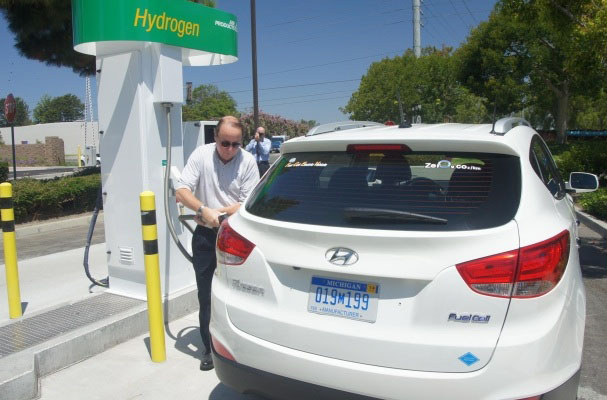
On opening day in August of 2011, director of the program Scott Samuelson called it “a paradigm shift” explaining that “We’re taking an endless stream of human waste and transforming it to transportation fuel and electricity. This is the first time this has ever been done.” (source) The fuel comes from ‘digesters’, bacteria that break down the human waste into a biogas.
With shiny, new white and green gas pumps, the station is capable of fueling 30 cars a day currently. It also produces some 250 kw of power for use by the wastewater treatment plant. The on-site nature of the system takes any transportation logistics out of the equation making it a truly sustainable alternative.
As part of California’s goal to create a ‘hydrogen highway’ the station is part of a 3 year demonstration project. If it goes well, you can expect to see these rolled out in more locations across the state.
Jun 7th, 2012 | By Aubrey Yee
For about the last 10,000 years we’ve been living in an epoch called the Holocene. This time period has been defined by the worldwide spread of the human race and a relatively stable climate. In 2000, renowned atmospheric chemist Paul Crutzen came to believe that he was no longer living in the Holocene. That in fact mankind’s affect on planetary systems had become so pervasive and so influential that a new era had begun. He named this new era the Anthropocene and over the next few years the term began to gain acceptance in first academic and then more popular circles.
http://vimeo.com/39048998
The Anthropocene, as Crutzen and others now see it, is “the recent age of man.” A time in which all manner of ecological processes from the macro to the micro are being changed and affected in significant ways by our presence on the planet. Acknowledging that humankind’s influence is central and ubiquitous is no small shift in thinking. It is in fact a massive paradigm shift in the scientific field. A field that previously saw humans as observers of natural processes rather than creators of them.
In 2009, Crutzen along with a group of academics, published a paper titled The Anthropocene: conceptual and historical perspectives in which they contend:
The human imprint on the global environment has now become so large and active that it rivals some of the great forces of Nature in its impact on the functioning of the Earth system…In this paper, we put forward the case for formally recognizing the Anthropocene as a new epoch in Earth history, arguing that the advent of the Industrial Revolution around 1800 provides a logical start date for the new epoch.
We live in a time where geoengineering, genetically modified organisms and artificial intelligence are part of our reality and increasingly we are finding new ways to both create and affect life. Crutzen and others believe that by acknowledging the advent of a new era we force ourselves to accept our new role in managing and stewarding the processes of the natural world. Rather than seeing humans as outside observers of nature, the Anthropocene asks us to envision humans as both creators and managers of a world that we are intimately interconnected with. There is a responsibility inherent in humankind’s ability to effect biological and chemical processes all the way down to the cellular level.
In 2009 a group of international academics joined forces to create the planetary boundaries manifesto which outlines nine planetary boundaries that must be maintained for life on planet earth to sustain. Published in the journal Nature, the group calls for intervention in planetary processes where we have crossed these boundaries so as to recreate and sustain the climactic environment we have adapted to during the Holocene era. In our new role as stewards of the future, the Anthropocene era challenges us to examine much more deeply our impact on the planet and all manners of life that depend upon Earth to survive.
Jun 7th, 2012 | By Aubrey Yee
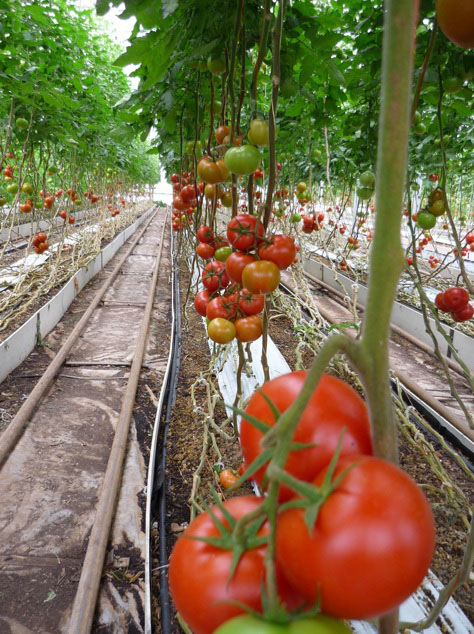 Sunizona family farms in Arizona is a veganic farm. Started in 1996 and family run, the farm produces a variety of greens, cucumbers, tomatos, herbs and a variety of seasonal vegetables, 98% of which are sold only in Arizona.
The motto behind ‘Veganic Growing’ is simply “growing without cruelty”. This form of agriculture takes any cruelty to animals completely out of the equation. What that means is that no product derived from a confined or slaughtered animal - fertilizer, manure, fish meal, etc. - is used in the growing process.
The idea is that heavy industrial livestock production has a huge impact on the environment and the animals processed live in suffering. So free range animals can be raised on a veganic farm and used to create fertilizers, but no animals will be harmed during any part of the growing process.
To substitute for the bone meal, manure, fish meal and other animal products usually used in organic and other agriculture, veganic farmers use mulch, vegetable compost, green manure, chipped branch wood, crop rotation and polyculture to create greater soil and plant productivity. Veganic farmers also reduce their use of fossil fuels because they try to obtain all the sources of fertility directly on their farm.
Veganic farming is yet another way for farmers to go beyond organic and differentiate their products from the big organic producers. Cruelty free and sustainable.
Jun 6th, 2012 | By Aubrey Yee
Whether you want to save energy because you know it’s good for the planet or because you know it’s good for your wallet, this new app for your smart phone can definitely help.
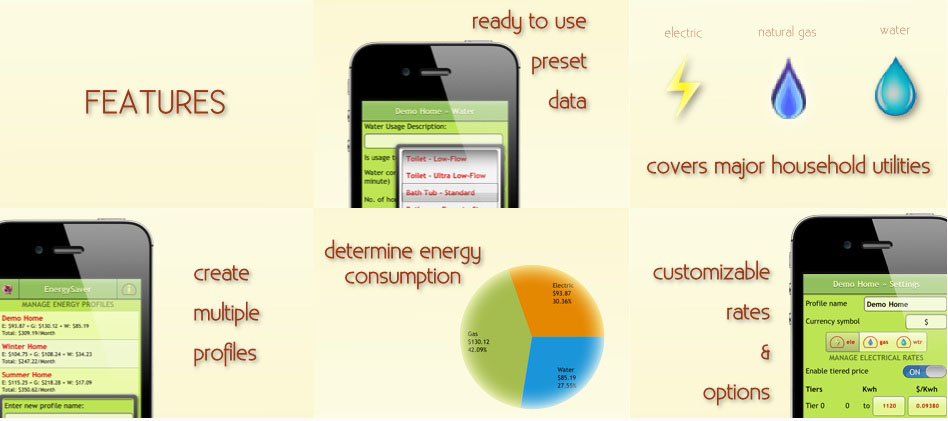
“EnergySaver allows you to analyze your current and estimate your future energy consumption instead of just analyzing or tracking past energy consumption. EnergySaver also enables you to customize and analyze each appliance’s energy consumption instead of just the overall consumption. By analyzing each appliance’s current energy consumption, you can make real changes that will translate into more money in your wallet.” (source)
The app works with iOS and Android platforms. Creators claim that it can cut your electric bill up to 10% simply by eliminating phantom loads from your household appliances. Beyond that you can begin to recognize which appliances consume the most energy and start changing your behavior to save energy and save money. The app allows multiple household profiles so you can monitor your house, your parent’s house, or should you be so blessed, your second home.
With pre-populated average rate information for all 50 states, you can compare your energy use to others in your community to see where you fall on the spectrum. The same app will also analyze your water usage and rates.
To learn more and download the app, visit Energy Saver.
Jun 5th, 2012 | By Nicole Rogers
What is Food Insecurity?
The World Food Summit of 1996 defined food security as existing “when all people at all times have access to sufficient, safe, nutritious food to maintain a healthy and active life”. Food insecurity certainly isn’t a new thing, since the dawn of humanity there have been those who don’t know where their next meal is coming from. That insecurity can range in severity from occasional meal uncertainty to full blown famine. One factor in the IPC Acute Food Insecurity Reference Table that determines the breaking point between Phase 1 mild food security and Phase 2 stressed food insecurity is the likelihood that someone suffering from food insecurity might break the law in order to eat or provide food for one’s family.
According to the World Health Organization, food security is built on three pillars:
With plenty of food on grocery store shelves in the United States, it’s not surprising that food access and poverty are the issues deeply affecting food insecurity in America. A USDA study indicated that in 2010, 17.2 million households in America had difficulty providing enough food due to a lack of resources. Among the Americans suffering from food insecurity are hardworking people who simply don’t always make enough to feed their family, children and seniors. With rising food prices, food insecurity in the US isn’t going away.
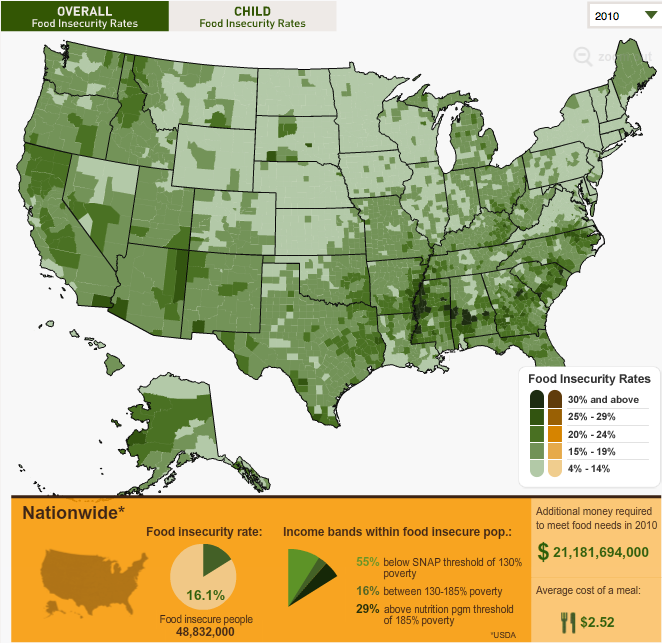
Map courtesy FeedingAmerica.org.
Why does it matter?
The fact remains that 16 million children in the United States lived in food insecure households in 2010, according to the USDA. Hunger isn’t just a matter of discomfort. Good nutrition, particularly in the first three years of life, is important in establishing and maintaining a good foundation that has implications on a child’s future physical and mental health, academic achievement, and economic productivity.
There are public assistance programs and food banks available to help Americans who are currently food insecure, but in a country where nearly 15% of the U.S. population relied on food stamps last year, one might question the sustainability of such a practice. Addressing food waste may be one solution. A 1997 study by the Department of Agriculture figured that about 10 million people a year could be fed through the recovery of just one-fifth of food waste. Check out our post on the topic to learn some ways to cut back on your own food waste.
It is important to address food insecurity in our country now to make sure that the next generation of Americans have the resources they need to be the best they can be.
Jun 5th, 2012 | By Nicole Rogers
 2012 Chevy Volt photo courtesy GM under Creative Commons 3.0 License
GM says drivers of the Chevy Volt have saved 2.1 million gallons, or a supertanker, of gas by driving their vehicles in electric mode. Volt drivers drive electrically about 60 percent of the time, with the car’s extended mileage kicking in the rest of the time. Volt owners typically drive an average of 900 miles between fill ups at the gas station. The company hopes to court an even larger pool of energy-conscious drivers with some pretty dazzling statistics.
According to Chevrolet, the 40 Million Total Electric Miles (EV) already driven are equivalent to:
16,373 trips across the United States (2,443 miles from New York to Los Angeles)
1,606 trips around the Earth (24,901 miles each)
167 trips to the Moon (238,657 miles each)
2,130,000 Gallons of Gas Saved, which is equivalent to:
50,714 barrels of gas saved (42 gallons of gas per barrel)
$8 million saved at the gas pump (based on $3.80/gallon of gas)
387 U.S. semi-truck tankers of gas saved (5,500 gallons of gas each)
One supertanker of gas saved (2 million gallons of gas)
With more electric and hybrid cars on the market every year, there is reason to be hopeful for even better statistics in the future.
Jun 4th, 2012 | By Aubrey Yee
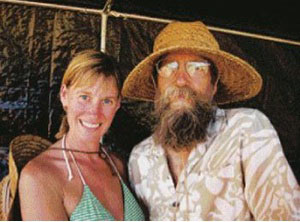 His name is Sun, and he is an organic farmer. Living off the grid, growing myriad vegetables on the island of Kauai, Sun is the living image of what you might expect of a fairytale farmer: big beard, big glasses, big straw hat. With his apprentice Lisa Fuller at his side, One Song Farm has become legendary on the island for their success at turning clay-hardened soil into gardening gold.
Once a carpenter managing big jobs in Southern California, Sun moved to Kauai several decades ago and leased some land to begin farming. Rather than just planting seeds, he began tending the soil itself. He started using a technique he calls “double digging” in which the tough soil in each vegetable bed is hand dug down to two feet and then worked with lots of rich organic compost and worms. It’s an admittedly intensive process but one of the secrets to Sun’s long term success. And as he explains, “After about five years it’s a piece of cake. There’s no more tilling (the soil), you just throw seeds at it.”
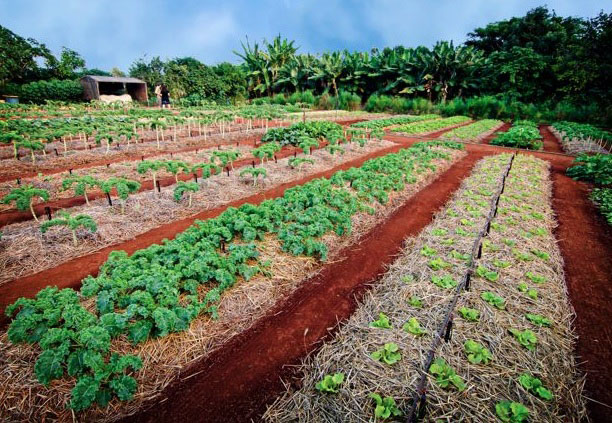
When Sun first moved to Kauai, he was told that organic farming would never work on the island where large plantation style agriculture had always ruled. Undaunted, Sun charged ahead, his credo “The difficult we do right away, the impossible takes a little bit longer. Once you give the plants what they need, like the right variety, in the right soil, you are going to have produce that you simply can’t believe is so-o-oo good.”
In keeping with Sun’s strong ethic of maintaining a low carbon footprint, the produce grown on One Song Farm can only be found at locally owned grocery stores and farmers markets on the island of Kauai. Recently, One Song Farm hosted a dinner at the farm with foods grown on the farm in concert with local Kauai sommelier and farm-to-table advocate Colin Darrell. Darrell is founder of the Grow Culture initiative, a Hawaii state wide virtual farmers market that aims to connect farmers and consumers in innovative ways online.
To further his organic cause in the islands Sun, along with another local organic farmer Phil Sheldon, created HOFA - Hawaiian Organic Farmer’s Association - which certifies organic farming under the USDA’s National Organic Program Federal Organic Rule.
Clearly living his own labor of love, Sun has built an organic legacy on a beautiful, remote tropical island, which is definitely worthy of storybook status.
Jun 4th, 2012 | By Nicole Rogers
<div class="caption" id="attachment_3574" align="alignnone" width="640"]
What do you get when you mix two bearded Brooklyn chocolatiers (who happen to be brothers), a sailboat captain (and the ship he built in his Cape Cod backyard over 25 years), and a shipment of 20 tons of cocoa sailing from the Dominican Republic to the shipyards of Brooklyn? No, not a Wes Anderson film. You get mountains of red tape, confused Dominican port officials, and a cocoa bean importer flown in to explain why these guys are sailing their cocoa beans on a drug route when it would be much easier to put them on a big ship with hundreds of metal containers.
You also get the beginning of a sea change (sorry, I had to) in the way we think about shipping and local food. Someone had to do it first, and Rick and Michael Mast have paved the way by sailing their annual shipment of cocoa from the Dominican Republic.[^wsj]
http://vimeo.com/23086877
Known for small batches and incredible attention to detail, Mast Brothers Chocolate is the first and only bean-to-bar chocolate operation in New York City, and a proud symbol of the Brooklyn local food movement. The beans are roasted on site, chocolate bars are hand-wrapped in paper printed in-house, and the ingredients include only cocoa, sugar and a few bonus ingredients like sea salt from Maine created using solar salt houses - nothing to mask the complex flavor of the carefully sourced cocoa beans.
The brothers with the apropos surname decided a few years ago to set the goal of shipping their beans on wind power. After all, their business is based on a sort of old-is-new model of simplicity, so why not just sail the beans?
http://youtu.be/w0L2eUFu3q4
As Rick Mast says in the video above, trying to do something that seems simple in such a complex world can be difficult. But as visible members of the local food movement with a product that is decidedly not locally sourced, the Mast brothers have moved heaven and earth to reduce their carbon footprint.
Shipping by sail saved the pollution equivalent of 84 days of travel for a typical passenger automobile. The trailblazing 2011 shipment was the first time a sailing ship had unloaded commercial cargo in New York since 1939. Even with the added expense and headaches of sailing, the brothers plan to, slowly over time, have all of their beans arrive via the power of wind. With experience, each year should make for an easier and more affordable sustainable voyage that is still chocked full of adventure.
Learn more about Mast Brothers Chocolate below.
http://vimeo.com/13664547
[^wsj]: Wall Street Journal: Cocoa Arrives, By Sail
Jun 2nd, 2012 | By Nicole Rogers
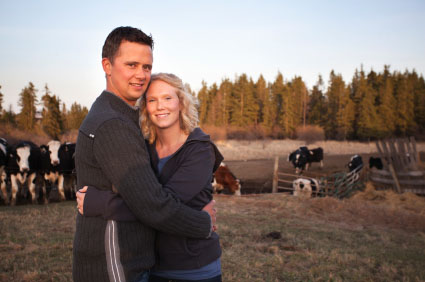
Agriculture Secretary Tom Vilsack announced May 25 that the USDA is seeking comments on a new microloan program to help small and family farm operations progress through their start-up years with the goal of eventually graduating to commercial credit.
“Over the past three years, we have expanded farm and operating loans to Americans from all backgrounds to help raise a new crop of producers across the country,” said Vilsack. “As we expand options in agriculture, we’re seeing a new vibrancy across the countryside as younger people - many of whom are now involved in local and regional production - pursue livelihoods in farming, raising food for local consumption. By leveraging USDA’s lending programs for beginning farmers and ranchers and smaller producers, we’re helping to rebuild and revitalize our rural communities.”
 The new program would allow the USDA’s Farm Service Agency to make smaller loans, with a principal balance of up to $35,000, and would streamline the application process to require less paperwork for farmers.
Although the microloan program is not exclusively targeted at young or beginning farmers, the program will be helpful in allowing these groups to access federal credit and obtain loans to help them start their farming operations, according to the National Sustainable Agriculture Coalition.
“Capital is the number one need of young and beginning farmers in the United States,” said Lindsey Lusher Shute of the National Young Farmers’ Coalition. “USDA microloans will fuel new farm businesses and a new generation of family farmers.”
Small farmers often rely on credit cards or personal loans, which carry high interest rates and have less flexible payment schedules, to finance their operations. The new streamlined application process would mean more efficient processing time for smaller loans, adding flexibility to some of the eligibility requirements, and reducing the application requirements.
As with any loan, the government will be taking a financial risk with microloans to new farmers and young farmers, but with a dwindling farm population and 40% of farmers over age 55, what better time to invest in the future of farming?
The proposed rule may be viewed here.
[USDA]